
Our Services
Strategy, technology and execution that actually move you forward
Nine lines of work. Most engagements draw on more than one, because the problems that bring companies here rarely sit inside a single one of them.
The nine lines
What you can get done with Kendoo
Nine lines of work in three areas. Most engagements draw on more than one, and each line has its own page with the scope, the boundaries and the questions executives ask before committing.
Lead the technology
Decisions, delivery and code you can trust.
-
CTO on Demand
Senior technology leadership, without a full-time hire
- An owner for the technical decisions that keep being deferred
- Architecture and delivery practices set and followed through
- A monthly written report against a baseline
-
AI Transformation
AI speed, with the engineering discipline to trust it
- Review, tests and guardrails for AI-assisted code
- Working practices that keep judgement inside the team
- Progress measured against a baseline
-
Software R&D Services
Vibe coding, held to a professional standard
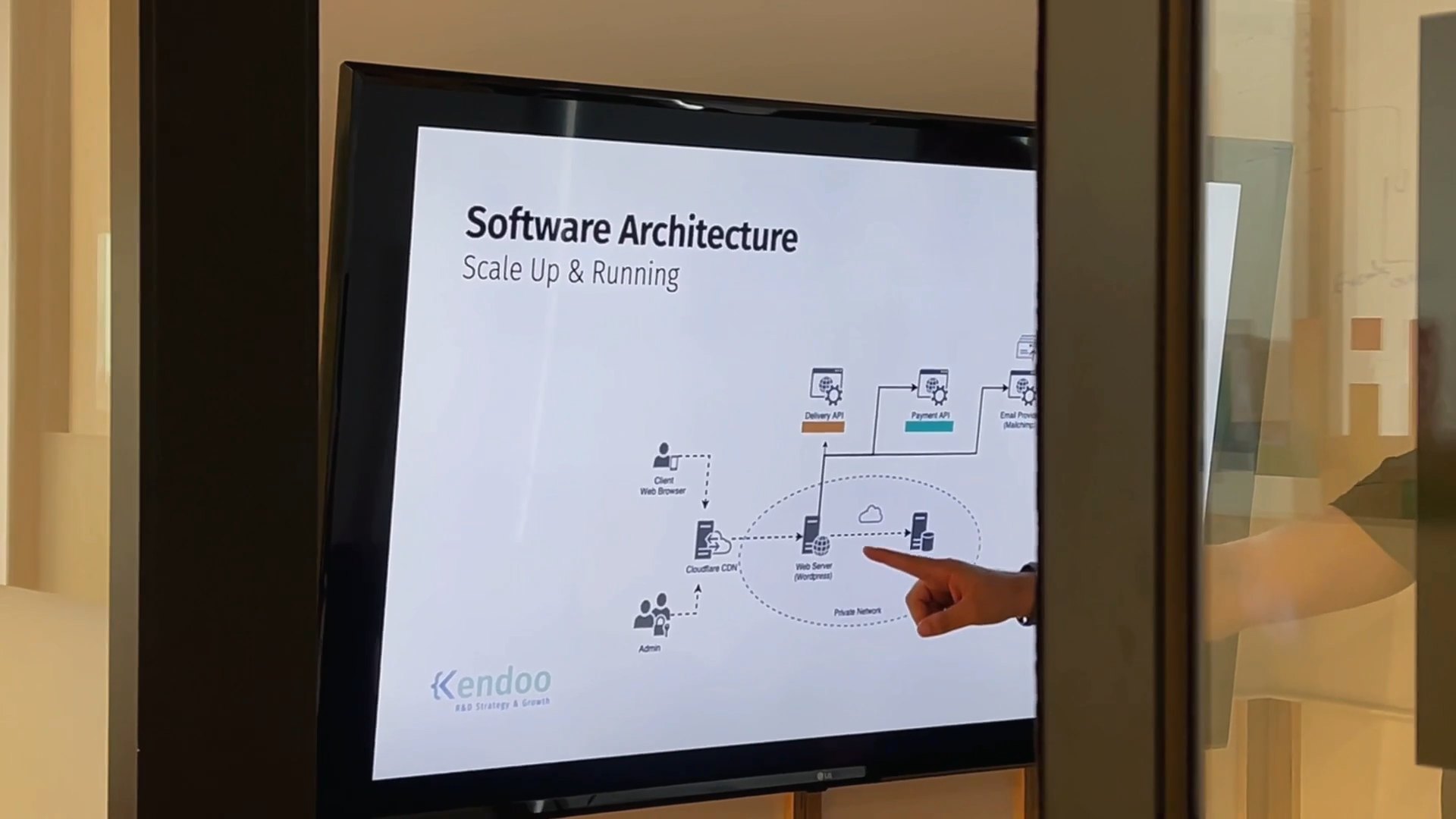
- Web, mobile, IoT and API development by senior engineers
- Every change reviewed and tested
- Regular written reports and full visibility
Grow the organisation
Teams, managers and ways of working that keep up with growth.
-
Growth Strategy
Teams that work smarter as the company grows
- Workflows that fit how the work actually happens
- Clear roles and decision rights
- Mentoring for executives and leaders
-
Team Dynamics
A shared language for teams under pressure
- Four facilitated workshops, 60 to 75 minutes each
- For engineering, product, leadership or mixed groups
- Tools the team keeps using afterwards
-
People & HR Advisory
When the organisation grows faster than its management
- An organisational diagnosis with clear recommendations
- Coaching for managers through hard decisions
- An external HR partner when you have none
Win the market
Be understood, chosen and used.
-
Brand Development
A technology company people understand and remember
- Core values and messaging
- Visual identity, voice and tone
- A consistent digital presence and customer touchpoints
-
Business Development
From technical capability to commercial traction
- A focused market and a clear value proposition
- Credible routes to customers and partnerships
- A pipeline that produces learning, not noise
-
User Experience Strategy
Decide what to build, and why
- User research grounded in real behaviour
- Design for new products and redesigns
- A clear answer when a product is not being used
Where most engagements begin
Three lines at the centre of the work
All nine lines are real. These three are where most clients start, and where Kendoo's way of working shows most clearly.

CTO on Demand
Senior technology leadership, without a full-time hire
Amir steps in as your technology partner: architecture, development practices and delivery, with decision rights agreed in writing and a monthly written report against a baseline.
About CTO on Demand
Team Dynamics
A shared language for teams under pressure
Facilitated workshops for engineering, product and leadership groups: how people act under pressure and uncertainty, turned into tools the team keeps using after the session.
About the workshops
Software R&D Services
Vibe coding, held to a professional standard
AI-assisted speed from senior engineers, with every change reviewed and tested, regular written reports, direct communication with the people doing the work, and full visibility into what is built and why.
About Software R&DHow we work
Because your challenges are not like anyone else's
When it comes to growth we have the knowledge and the experience, but every company is different, and the role is to listen at least as much as to advise.
The solutions are shaped around the profile, the budget and the expectations of each client. Whether it is a single meeting or a long engagement, a contained fix or a structural overhaul, the quality of the work is the thing that matters.
That is also why the lines above are a description rather than a menu. What an engagement includes is decided from what is actually happening, not from which page you arrived on.
Getting started
How an engagement takes shape
Describe the symptom
Thirty minutes on what is actually happening. Not which service you think you need, but what is going wrong and what it is costing.
Agree the scope and the rights
What the engagement owns, what it does not, and who decides what. Written down before it starts, because that is what makes accountability real.
Baseline before intervention
The first month establishes where things actually stand. Acting in week one is how you fix the wrong thing confidently.
Cadence and reporting
A weekly working rhythm and a monthly written report against that baseline, including what did not move.
That is the shape of retained work. A workshop is a shorter path: a conversation about what the team is carrying, then a session or a short series run with them. A software R&D engagement is scoped to the piece of work and reviewed against it.
Questions executives ask
Do we have to pick one service?
No, and most engagements do not. The lines describe where the work tends to concentrate, not separate products with separate contracts. A delivery problem often turns out to be an organisational one, and an AI programme usually needs the delivery system rebuilt around it first.
Which one should we start with?
Start with the symptom rather than the service. Describe what is actually happening in the first conversation and the shape of the engagement follows from that. Picking a service first is how companies end up buying the wrong one.
Can you take on a small, defined piece of work?
Yes, in three shapes. Workshops are booked on their own. Software R&D is scoped to the work itself. And where a question is narrow and answerable, a short scoped review is possible. Where it is really a symptom of something structural, that is said on the call rather than after three months of a retainer.
Start with the problem, not the service
Thirty minutes on what is actually happening, and a straight answer about which of these is the right place to begin.